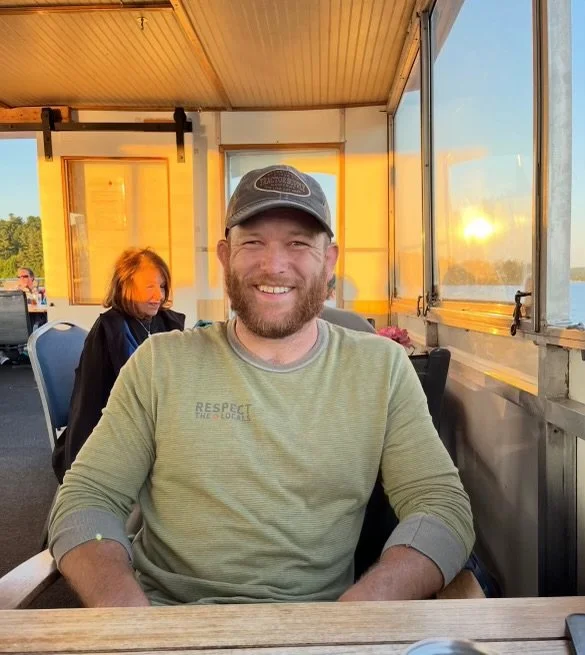
Scott Georgaklis is a high-performance coach who works with leadership, and professional development. His work spans Olympic and professional athletes, elite coaches, and executives in the financial and technology sectors, where the common demand is the same: clarity under pressure, durability over time, and performance when it matters most.
Scott’s approach integrates strength and conditioning, breathwork, nervous-system regulation, and movement science into practical systems that elevate both performance and long-term health. His methods are trusted not only for producing results, but for doing so sustainably — without sacrificing longevity, decision-making, or well-being.
Scott spent years as a wilderness survival coach, guiding individuals and groups in environments where clarity, composure, and self-regulation were not abstract concepts but necessities. That early work shaped a core principle that still defines his approach today: when systems break down, fundamentals matter most — breath, movement, awareness, and decision-making under pressure.
In parallel with his coaching career, Scott’s work as a therapist deepened his understanding of the nervous system, injury, recovery, and the psychological components of performance. This dual lens — therapeutic and performance-driven — allows him to build systems that enhance output without compromising long-term health, resilience, or identity.
His experience at the pinnacle of sport is exemplified by his work with Olympic and world-class athletes. As three-time U.S. Olympian, 2016 Olympic silver medalist, and Brazilian Jiu-Jitsu black belt Travis Stevens states:
“Scott Georgaklis was the only strength coach I have worked with who was able to put me on the podium at the Olympic Games.
Today, Scott applies the same rigor, systems thinking, and human-first philosophy to executives, teams, and organizations — helping people perform at a higher baseline in environments where stress, complexity, and responsibility are constant.
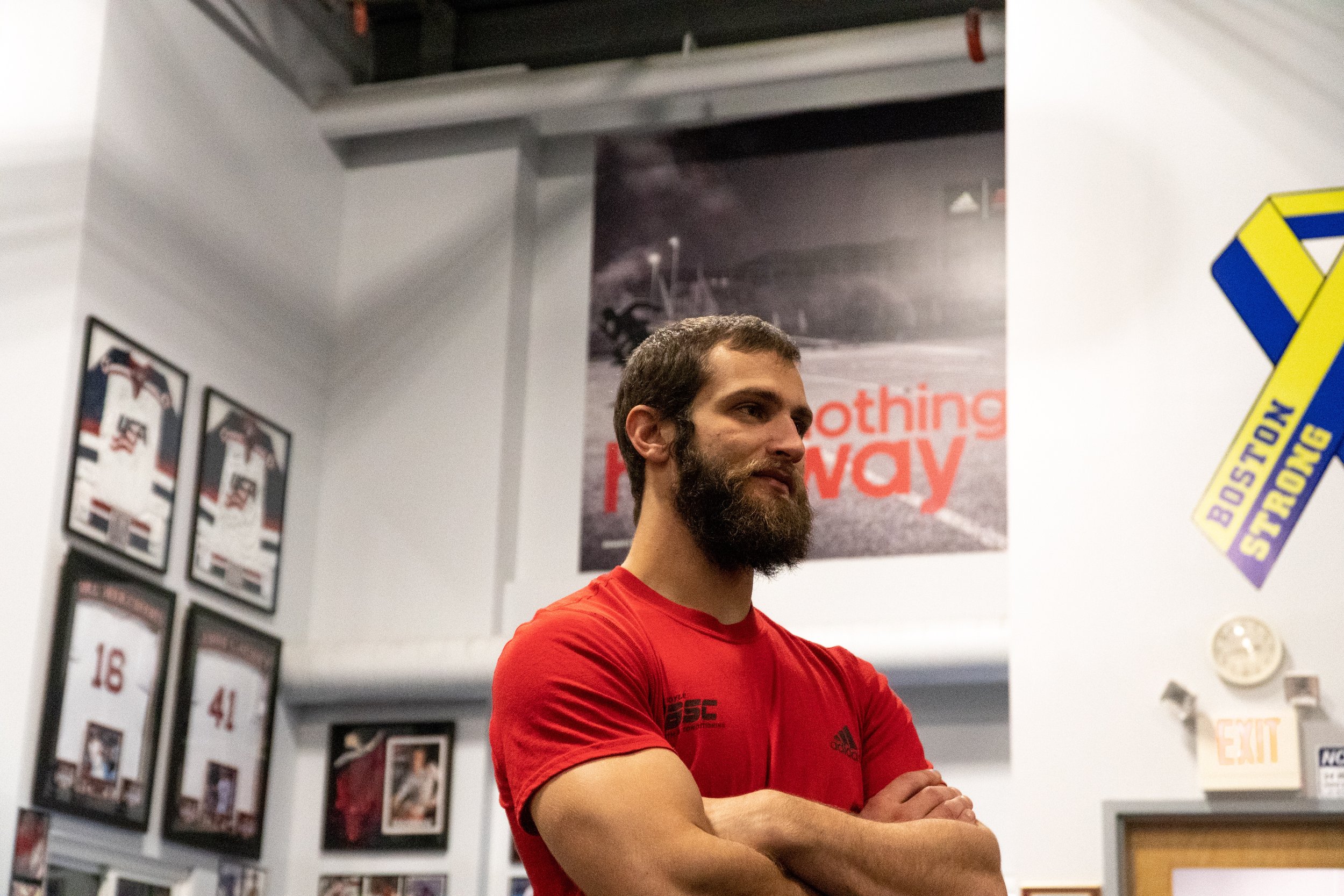
Abraham Hunter is a performance coach, professional Brazilian Jiu-Jitsu practitioner, and breathwork coach with a deep background in team building, wrestling-based athletics, and long-term athlete development. His work is grounded in the understanding that sustainable performance is built not just through physical capacity, but through culture, communication, and shared standards.
His work is informed by both lived experience in high-performance environments and formal training in the sciences, with an engineering-focused academic background that shapes how he approaches problem-solving, structure, and scalability.
In addition to his coaching work, Abraham is a business owner and team manager, with hands-on experience building, organizing, and sustaining teams in demanding environments. He brings a practical understanding of leadership, logistics, and accountability — balancing human needs with operational realities.
With roots in competitive wrestling and years immersed in high-level grappling environments, Abraham brings a systems-oriented perspective to performance — one that prioritizes discipline, adaptability, and collective responsibility. He has worked across teams and training environments to help athletes and professionals develop the resilience, trust, and internal regulation required to perform under pressure.
Abraham’s coaching style emphasizes breath control, nervous-system awareness, and embodied skill, helping individuals and groups improve focus, decision-making, and recovery in demanding settings. His experience building and supporting teams allows him to bridge the gap between individual excellence and group performance — aligning people around a shared baseline of readiness and accountability.
Whether working with athletes, coaches, or professional teams, Abraham is known for creating environments where people feel grounded, capable, and connected, enabling consistent performance over time rather than short-lived peaks.